
Triple E quotes will provide you with a bespoke quote for corded, motorised and walkalong track layouts.
Discover how UniBeam track helped deliver a safe, efficient rescue solution for the overhead technical grid at The Glasshouse International Centre for Music.
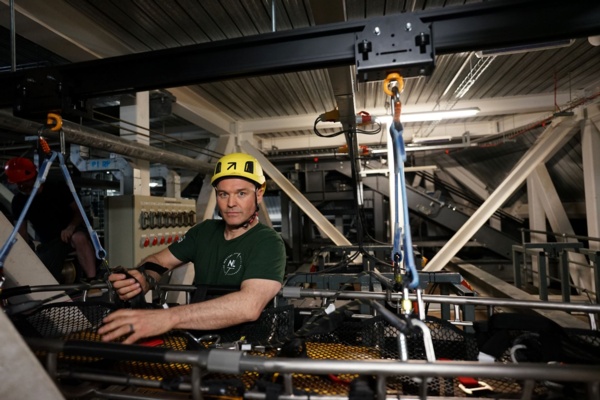
A music venue grid is never an easy place to work. In the best, there is enough head height to stand comfortably; in the worst, you have to crawl around. One feature they all share is that they are challenging working environments; filled with girders, control cabinets, electrical cabling, chain hoists and winches and are difficult to navigate safely.
Those who work in these spaces are well-trained professionals who take the necessary precautions to reduce hazards as much as they can. Like any technical working environment, a grid carries inherent risks that good process and equipment help manage. Girders will always remain a trip hazard or a thing-to-bang-your-head-on, while electrical systems will always carry the risk of being damaged and creating a live environment. Most experienced grid workers will have witnessed the occasional minor injury or medical issue that can be dealt with relatively easily. However, there is always the possibility that a casualty may need to be evacuated. Moving an injured or unconscious person through a grid’s confined spaces and multiple flights of stairs to ground level is a significant physical challenge, even for a trained team.
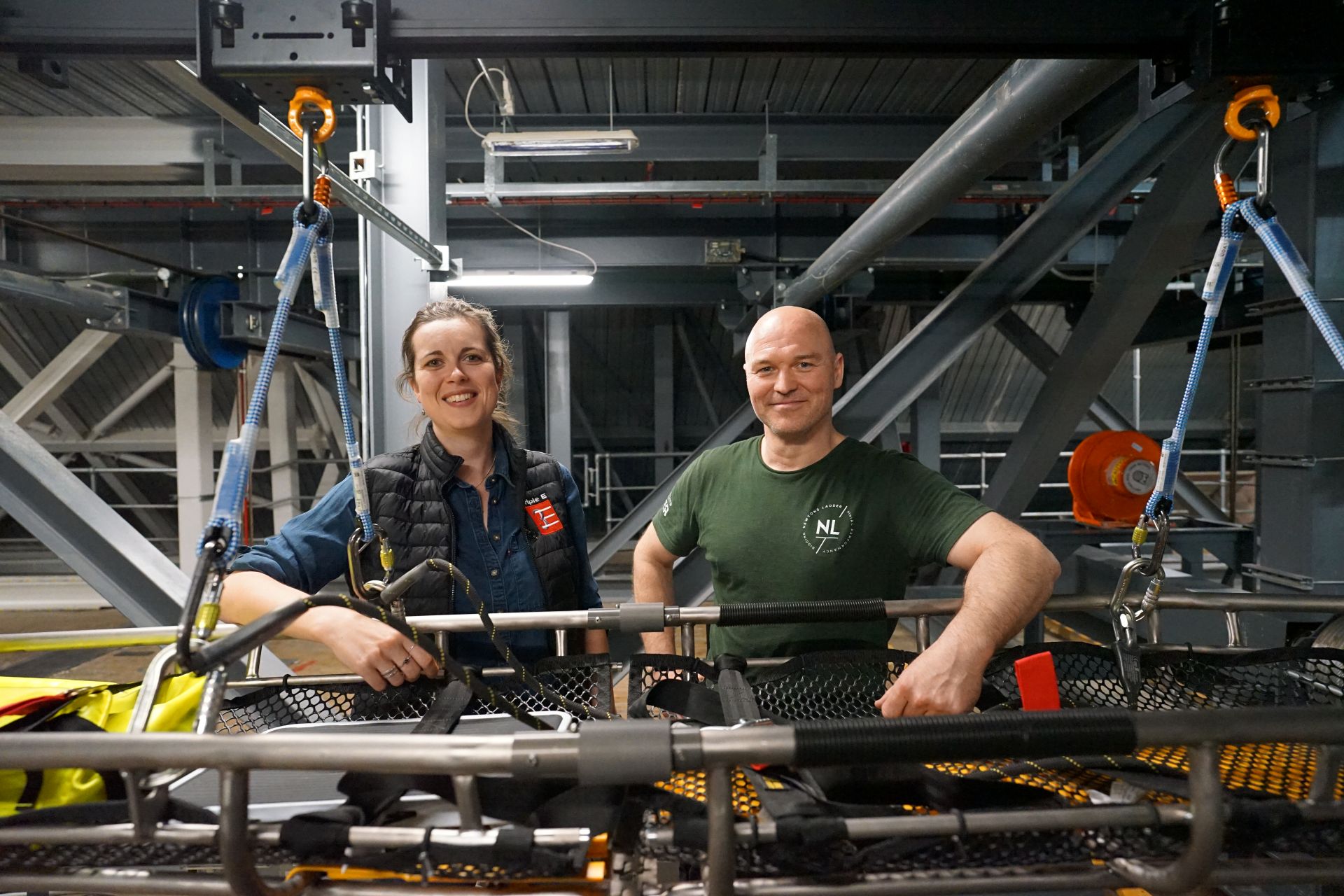
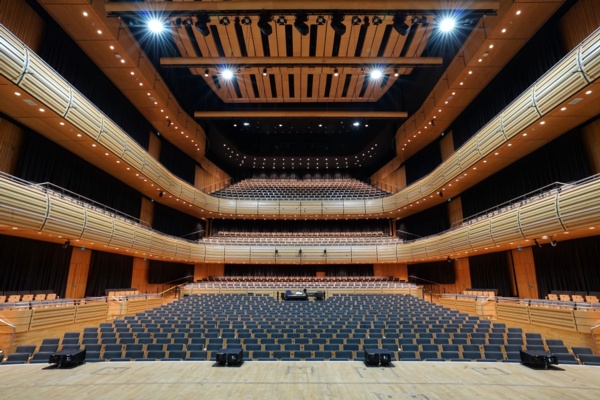
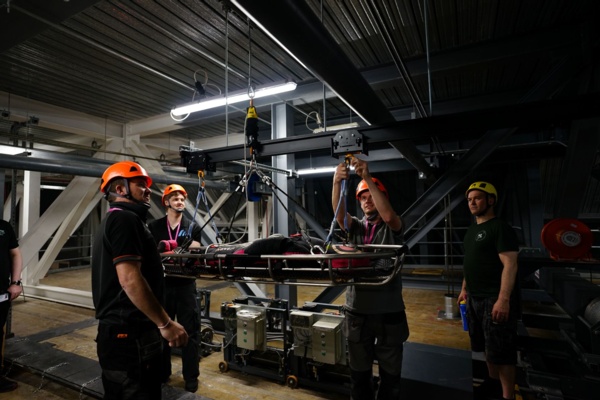
Colm Scott-Baird of Newton’s Ladder Ltd developed a solution to this problem: use Triple E’s UniBeam track to suspend a stretcher and send the casualty to an egress point from which they can be lowered onto the stage. His first installation, completed in 2026, is in The Glasshouse International Centre for Music in Gateshead. Colm designed a track layout that passes through each of the work zones in the grid and links them to the access hatch. A rescue team can send a casualty to the stage in minutes, potentially saving their life.
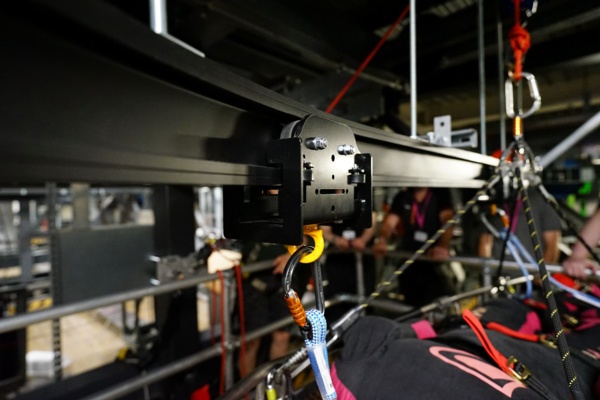
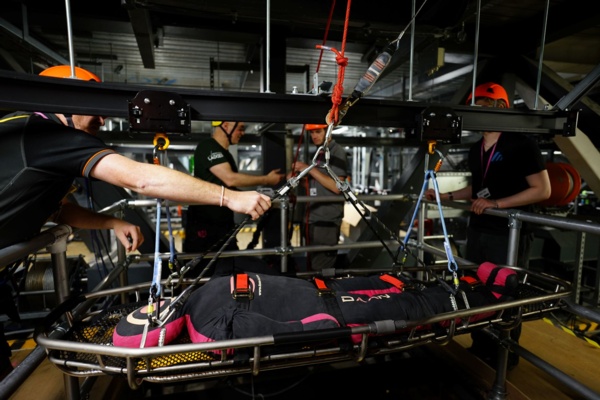
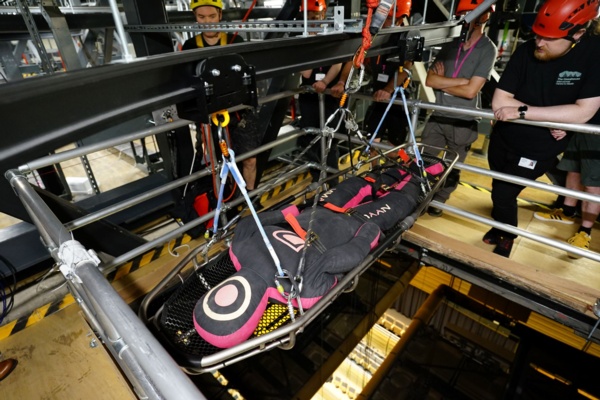
Colm chose UniBeam for its 580 kg point load and its compact 51 x 100 mm profile. UniBeam can be rolled to custom angles and radii, allowing the rescue track to follow the existing grid structure and run exactly where Colm needed it, through the maze of UBs and UCs supporting the building. The fact that UniBeam Scenery carriers run incredibly smoothly and therefore give the casualty as comfortable a journey as possible was a bonus. The stretcher is attached to two UBM2801 scenery carriers that each have a 385 kg WLL and are fitted with a Yoke 750 kg lifting eye. Following consultation with Anthony Kavanagh of Lyon Work & Rescue, the rescue system utilises a titanium stretcher so that it is lightweight and therefore easy to carry, and a series of rigging points to which a Petzl Jag Rescue Kit is fitted to lift the stretcher and casualty to the track, reducing the manual-handling demands on the six-person rescue team.
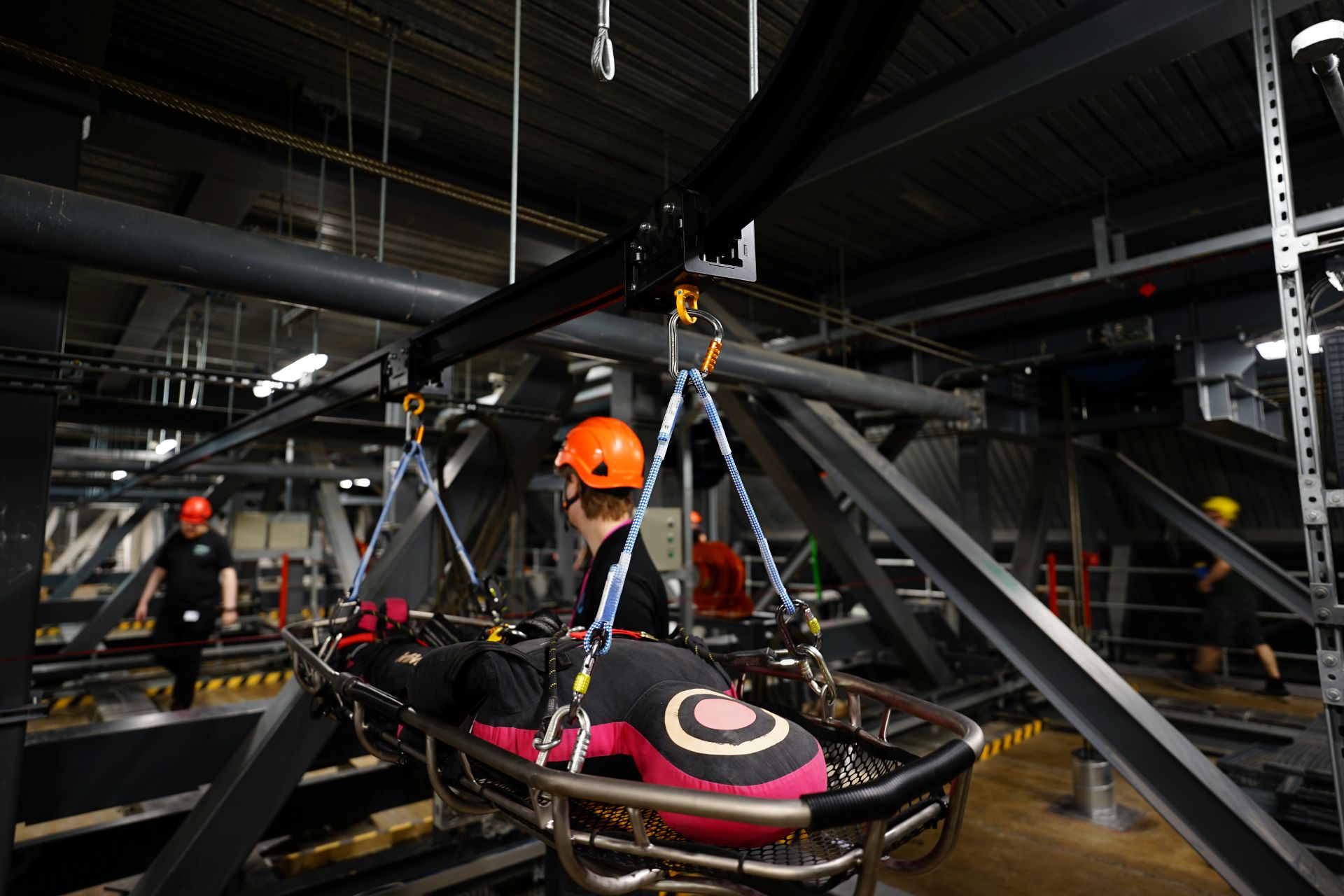
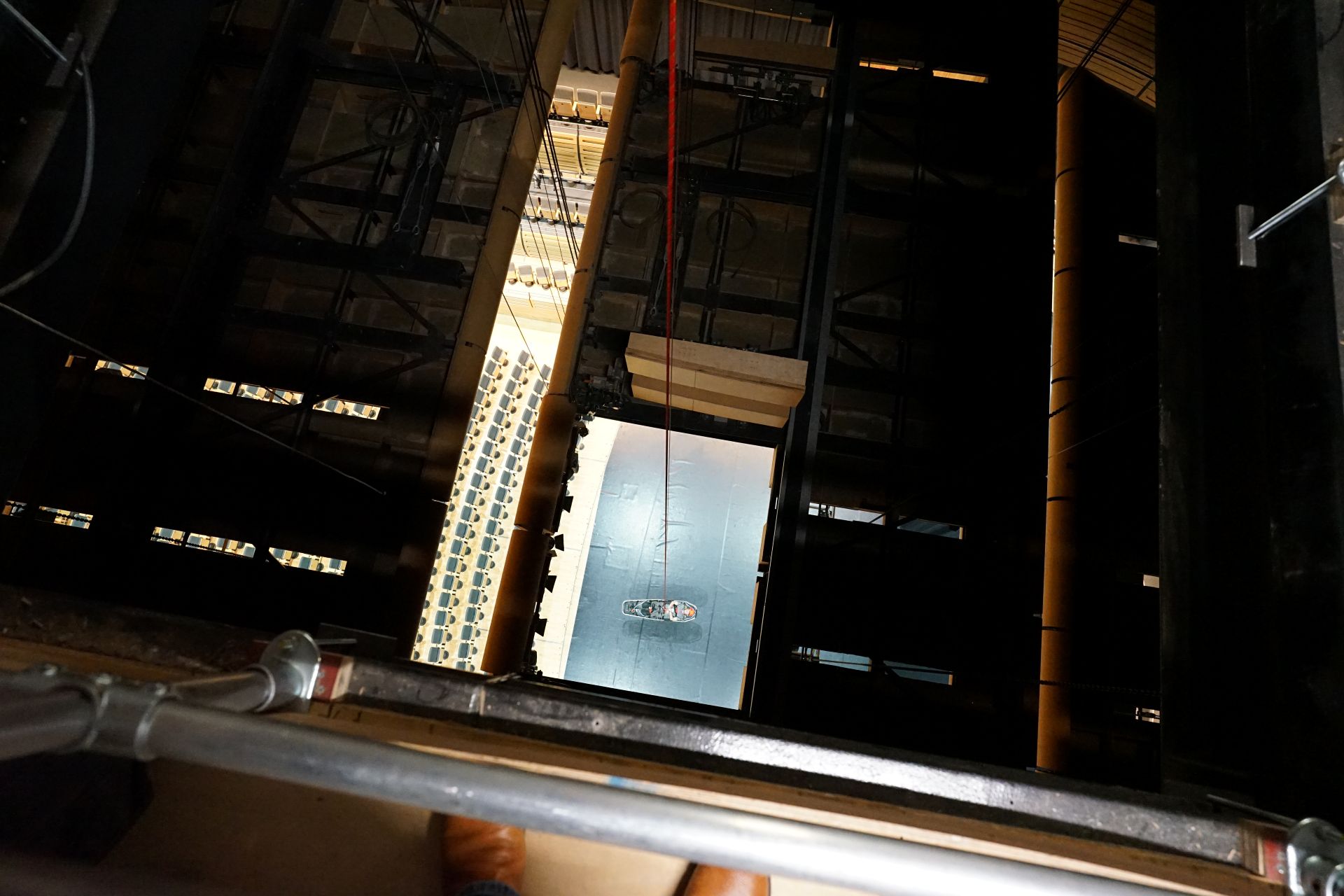
Once the stretcher reaches the egress point it is transferred to the lowering system. The lowering system consists of a low stretch 10.5 mm rescue rope and a Petzl ID anchored to Newton’s Ladder’s own anchor bracket. Redundancy is built into the system from a Blocfor Tractel fall arrest self-retracting line. The egress point itself, in this case an access hatch in the grid floor, is permanently protected with a Kee Klamp handrail to prevent unintended descents to the stage.
The Rescue Sequence
Together, these stages create a defined casualty evacuation system from the grid's working areas to the stage.
Before this system was installed, the rescue plan involved carrying a casualty down a series of narrow stairwells and through several level changes – from the grid, through an electrical plant room and down multiple further flights to reach ground level. The narrow stairwells, in particular, made this a physically demanding rescue route, and the new system was designed to remove that difficulty.
The new system replaces this long, restricted route with a direct transfer to the designated egress point above the stage.
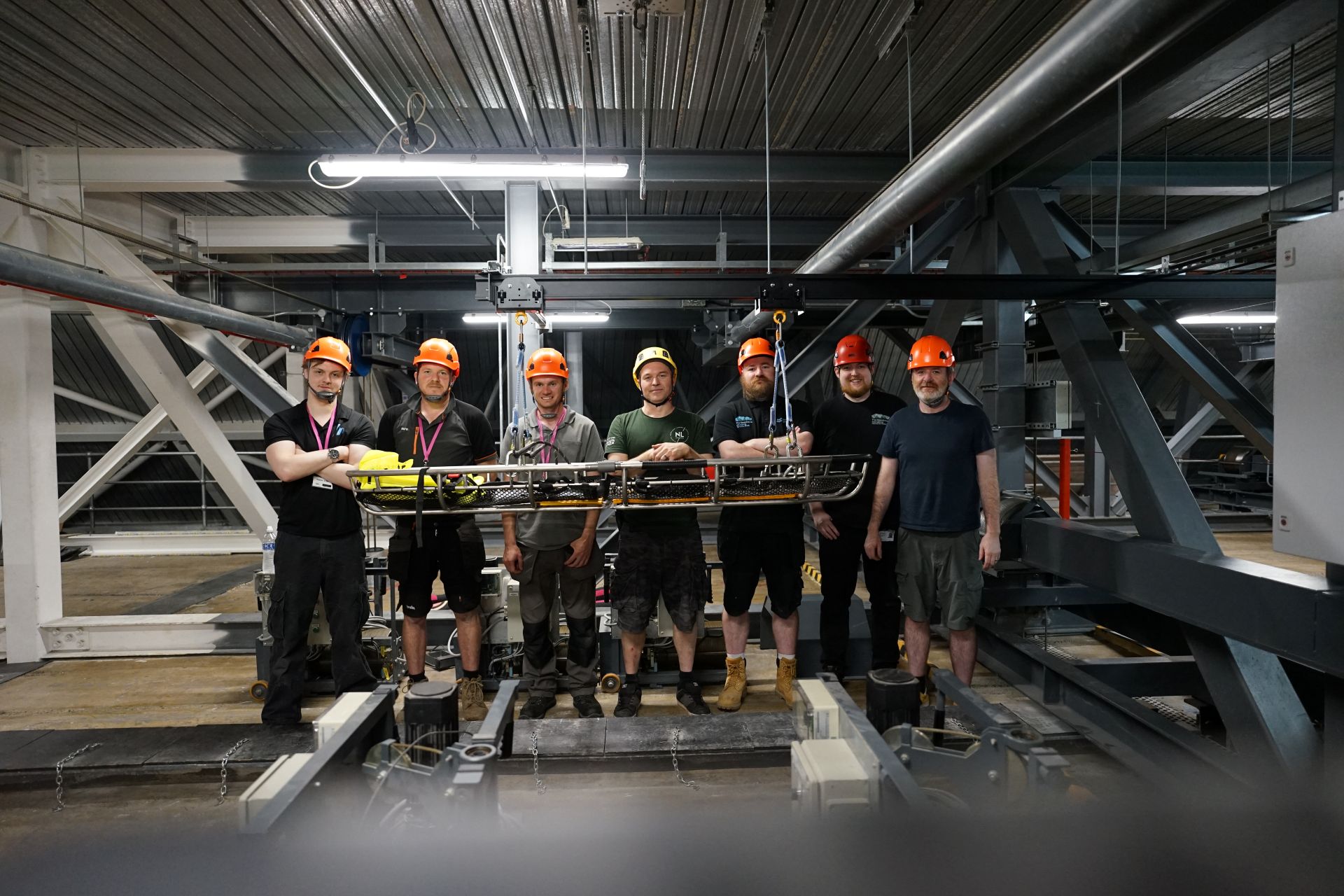
Lyon Work & Rescue, a renowned industry expert in rigging, rescue and training, designed the rescue method and trained Colm to deliver training for The Glasshouse, and other venues adopting the grid rescue system.
Triple E's UniBeam track formed the backbone of the system, providing a continuous route that allows a casualty to be moved safely from any working area within the grid to the designated egress point.
Anthony Kavanagh of Lyon Work and Rescue said: “I was approached by Colm to help develop the rescue plan for his grid rescue system. It was important to me that the system was simple to use as it’s not going to be enacted very often, and to ensure that it was memorable and easy to train. If it’s easy to train there will be less resistance to an annual refresher and this will be a safe and reliable method of rescue.
“We’ll be working with Colm on an ongoing basis to further develop and refine the grid rescue system over time and provide training for teams at venues where a system is installed.
“UniBeam was the perfect choice for this rescue system as it eliminates most of the manual handling normally associated with a rescue of this kind. I have recently been using this system as an example of best practice.”
The project demonstrates how an existing entertainment-engineering product can support a wider venue safety strategy.
interested in a performance venue Grid Rescue System?
If a rescue system like this could be right for your venue, contact Colm and Mona at [email protected] for system design, installation and rescue training.
For UniBeam specifications and bespoke track applications, contact the Triple E team.
Gateshead, UK
UniBeam
The Glasshouse International Centre for Music
Stage
View case studies relevant to this project sector and discover the solutions and products we delivered to achieve our clients requirements.
Sign up for
The Track Record will inform you on the latest Triple E group news such as new products, case studies, installation tips, pricing changes and more!
Sign Up Published 21 September 2026